Safe in the Syringe, Dangerous on the Floor: The Formaldehyde Contradiction at the Heart of Pharmaceutical Manufacturing
There is a particular irony embedded in the production of certain life-saving medicines. A vaccine that will ultimately protect a child from a deadly pathogen must, at some point in its creation, pass through a manufacturing environment where workers don respirators, engineers design elaborate ventilation systems, and federal regulators mandate strict exposure ceilings. The molecule responsible for that operational complexity is the same one present in the finished product at concentrations too low to cause harm: formaldehyde.
This is not a contradiction that the pharmaceutical industry has overlooked. It is one that manufacturers, regulators, and occupational health professionals have spent decades actively managing — with mixed results and evolving solutions.
Why Formaldehyde Belongs in Drug Manufacturing at All
Formaldehyde's role in pharmaceutical production is neither incidental nor easily replaced. In vaccine manufacturing, the compound serves as an inactivating agent — it chemically disables pathogens such as influenza viruses, poliovirus, and the bacteria responsible for diphtheria and pertussis, rendering them incapable of causing infection while preserving enough of their structural identity to train the immune system. The chemistry is precise and well-understood, and the process has underpinned vaccine safety for decades.
Beyond inactivation, formaldehyde participates in the synthesis of a range of pharmaceutical intermediates and excipients. Certain drug delivery systems, tablet coatings, and chemical precursors in active pharmaceutical ingredient (API) synthesis involve formaldehyde at various production stages. In each case, the compound's reactivity — the very property that makes it biologically useful — also makes it a hazard in concentrated or gaseous form.
At the concentrations present in a finished, purified vaccine dose, formaldehyde poses no meaningful risk to patients. The U.S. Food and Drug Administration has consistently affirmed this, noting that residual formaldehyde levels in approved vaccines are far below those produced naturally by the human body's own metabolic processes. But that reassurance applies to the end product, not to the environment in which it is made.
The Manufacturing Floor as a Hazard Zone
During active production, formaldehyde can be present in gaseous concentrations that far exceed what any finished pharmaceutical will ever contain. Workers who handle bulk formaldehyde solutions, operate inactivation reactors, or maintain equipment in close proximity to open-process streams face meaningful occupational exposure risks — including respiratory irritation, sensitization, and, with chronic high-level exposure, elevated cancer risk.
The Occupational Safety and Health Administration (OSHA) has established a permissible exposure limit (PEL) of 0.75 parts per million (ppm) as an eight-hour time-weighted average, with an action level of 0.5 ppm that triggers additional monitoring and medical surveillance requirements. The National Institute for Occupational Safety and Health (NIOSH) recommends even more conservative limits. For pharmaceutical manufacturers, meeting these thresholds in facilities where formaldehyde is an active process chemical requires sustained engineering investment.
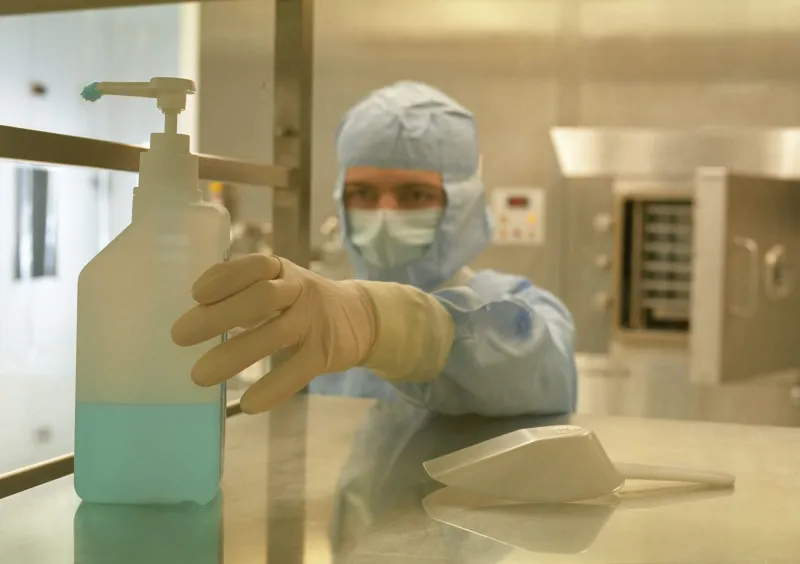
Closed-system reactors, local exhaust ventilation, continuous air monitoring, and personal protective equipment programs form the foundation of most compliance strategies. But pharmaceutical manufacturing environments present unique challenges. Cleanroom requirements for sterile drug production can conflict with traditional industrial ventilation approaches. Frequent equipment changeovers — a feature of multi-product biologics facilities — create repeated opportunities for inadvertent exposure during disassembly and cleaning. And the biological sensitivity of the products being made limits the chemical interventions that can be used to suppress formaldehyde volatility.
Regulatory Oversight Across Multiple Agencies
What makes pharmaceutical formaldehyde management particularly complex is the number of federal agencies with overlapping jurisdiction. OSHA governs worker exposure. The FDA regulates the manufacturing processes themselves under Current Good Manufacturing Practice (cGMP) standards. The Environmental Protection Agency (EPA) may require permits and monitoring for facilities that emit formaldehyde as an air pollutant under the Clean Air Act. State-level occupational health agencies add another layer in many jurisdictions.
Navigating these overlapping frameworks demands dedicated regulatory affairs and environmental health and safety (EHS) personnel. Large pharmaceutical manufacturers typically maintain internal exposure monitoring programs that exceed federal minimums — not only because best practices demand it, but because litigation risk and reputational exposure make voluntary rigor a sound business decision. Smaller contract manufacturing organizations (CMOs), which produce a substantial share of the U.S. drug supply, face the same regulatory obligations with fewer dedicated resources.
The FDA's cGMP framework does not prescribe specific formaldehyde controls, but it does require manufacturers to demonstrate that their processes consistently produce safe, pure, and potent products. Any process change that affects residual formaldehyde levels in a finished drug — including changes made to improve worker safety — must be validated and, in many cases, reported to the agency. This creates a regulatory feedback loop in which safety improvements on the manufacturing floor can trigger extensive documentation and approval processes.
Engineering Innovations Reshaping the Industry's Approach
The pharmaceutical sector has not stood still in the face of these challenges. Several technological and procedural advances are gradually shifting how manufacturers approach the formaldehyde problem.
Closed-loop inactivation systems, which minimize the surface area of open formaldehyde solutions and capture off-gases before they can enter the facility atmosphere, have become increasingly standard in new vaccine manufacturing facilities. Real-time continuous air monitoring, once prohibitively expensive, has become more accessible as sensor technology has improved — enabling faster worker response and more granular data for compliance documentation.
Some manufacturers have invested in alternative inactivation chemistries that could reduce or eliminate formaldehyde use for certain pathogens. Beta-propiolactone, for example, is used in some influenza vaccine production. However, alternative agents carry their own toxicity profiles and regulatory complexities, and formaldehyde's long track record of efficacy means that substitution is neither simple nor universally appropriate.
Process intensification — the trend toward smaller, more automated, and more contained manufacturing systems — offers perhaps the most promising long-term path. Continuous bioprocessing platforms, which replace large open-batch operations with enclosed, automated systems, inherently reduce the number of human touchpoints during formaldehyde-intensive steps. As these platforms mature and gain regulatory acceptance, they may substantially reduce occupational exposure risk without compromising product quality.
A Paradox That Demands Ongoing Attention
The formaldehyde paradox in pharmaceutical manufacturing is, in one sense, a story about chemistry: the same molecule behaves very differently at different concentrations and in different contexts. But it is also a story about institutional complexity — about what it takes to produce safe medicines in a regulatory environment that must simultaneously protect patients, workers, and the surrounding community.
For the workers who operate inactivation suites, clean bioreactors, and manage bulk chemical deliveries, the risks are real and the protections matter. For the patients who ultimately receive the products of that labor, the safety record is strong. Holding both of those truths simultaneously, and continuing to close the gap between them, is the ongoing work of an industry that has built its reputation on getting the chemistry right — at every stage of the process.