Curing Cancer With a Carcinogen: How Formaldehyde Became One of Oncology's Most Indispensable Tools
Few molecules in modern science occupy as paradoxical a position as formaldehyde. The International Agency for Research on Cancer classifies it as a Group 1 carcinogen — a substance with sufficient evidence of causing cancer in humans. Yet walk through any major cancer research center in the United States, from the MD Anderson Cancer Center in Houston to Memorial Sloan Kettering in New York, and you will find formaldehyde embedded in the daily workflow of laboratories working to defeat the very disease it is linked to causing. This is not an oversight. It is, in fact, a carefully managed scientific necessity.
The Foundation of Tissue Pathology
The most fundamental role formaldehyde plays in cancer research is as a tissue fixative. When a biopsy is taken — whether from a suspicious mass, a surgically removed tumor, or a tissue sample collected during a clinical trial — that specimen must be preserved almost immediately to prevent cellular degradation. Formalin, an aqueous solution of formaldehyde, has served this purpose for well over a century, and no alternative has yet matched its combination of accessibility, effectiveness, and cost.
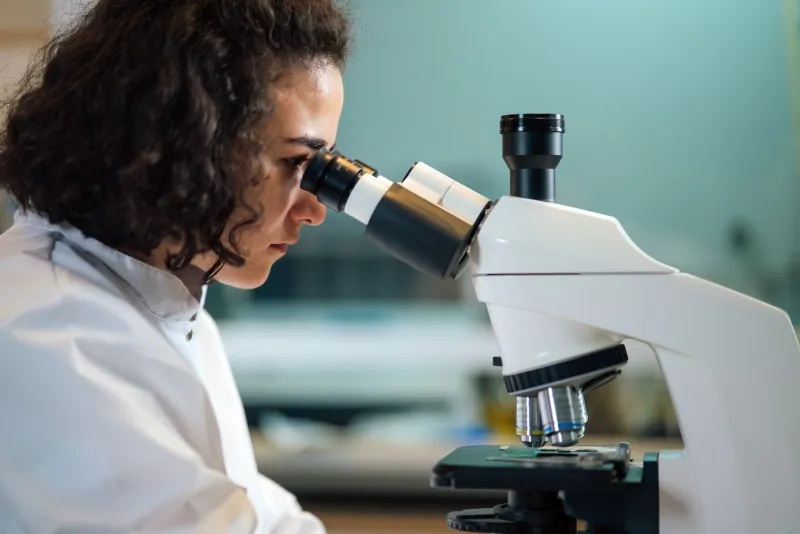
The chemistry behind fixation is precise. Formaldehyde cross-links proteins within the tissue, effectively halting biological decay and locking cellular structures in place. This preservation allows pathologists to examine the architecture of cancer cells under a microscope with high fidelity, identifying tumor grades, margins, and molecular markers that directly inform treatment decisions. Without reliable fixation, a biopsy sample collected in a clinic in rural Montana could not be shipped to a specialized pathology laboratory and still yield diagnostically useful results.
Formalin-fixed, paraffin-embedded tissue — commonly referred to by researchers as FFPE — represents one of the largest repositories of biological material in medical history. Hospitals across the country maintain archives of FFPE specimens dating back decades, and these collections have proven invaluable for retrospective cancer studies. Researchers can revisit stored samples to identify genetic mutations, trace disease progression, or evaluate the long-term outcomes of historical treatment protocols. That archive exists almost entirely because of formaldehyde.
Drug Development and Molecular Research
Beyond tissue pathology, formaldehyde participates in cancer research at the molecular level in ways that are less visible to the public but no less significant. Chromatin immunoprecipitation, a laboratory technique used to study how proteins interact with DNA — interactions that are frequently dysregulated in cancer — relies on formaldehyde to temporarily cross-link proteins to genetic material. This cross-linking captures a molecular snapshot of the genome at a specific moment, enabling researchers to map the regulatory mechanisms that drive tumor growth or suppress it.
Similarly, certain chemotherapy drugs and experimental cancer therapies interact with formaldehyde chemistry in ways researchers are only beginning to understand. Some studies have suggested that formaldehyde released endogenously within cells — a natural byproduct of normal metabolic processes — may play a role in how certain drugs exert their effects on cancer cells. This emerging area of inquiry does not diminish the compound's known hazards, but it does complicate the narrative that formaldehyde is purely an external threat with no legitimate biological role.
The Regulatory Framework Governing Laboratory Use
The United States Occupational Safety and Health Administration sets a permissible exposure limit for formaldehyde in workplace environments at 0.75 parts per million as an eight-hour time-weighted average, with a short-term exposure limit of two parts per million over any fifteen-minute period. Research laboratories that routinely handle formalin solutions are required to implement engineering controls — including fume hoods, ventilation systems, and closed-container protocols — to keep exposure well below these thresholds.
The National Toxicology Program and the Environmental Protection Agency have both issued guidance documents relevant to laboratory formaldehyde use, and most major research institutions maintain institutional biosafety committees that audit chemical handling practices as part of broader laboratory safety programs. Cancer research centers, which often operate at the intersection of clinical care and bench science, are subject to additional scrutiny because their personnel may include both laboratory researchers and healthcare workers with distinct exposure profiles.
These frameworks exist precisely because the scientific community does not dismiss formaldehyde's risks. The regulatory apparatus surrounding its use in cancer research reflects an institutional acknowledgment that the compound is hazardous and that hazard must be managed, not ignored.
Navigating the Contradiction in Practice
For the researchers who work with formaldehyde daily, the contradiction between its carcinogenic classification and its research utility is not experienced as an abstract philosophical problem. It is a practical reality managed through protocol, training, and infrastructure.
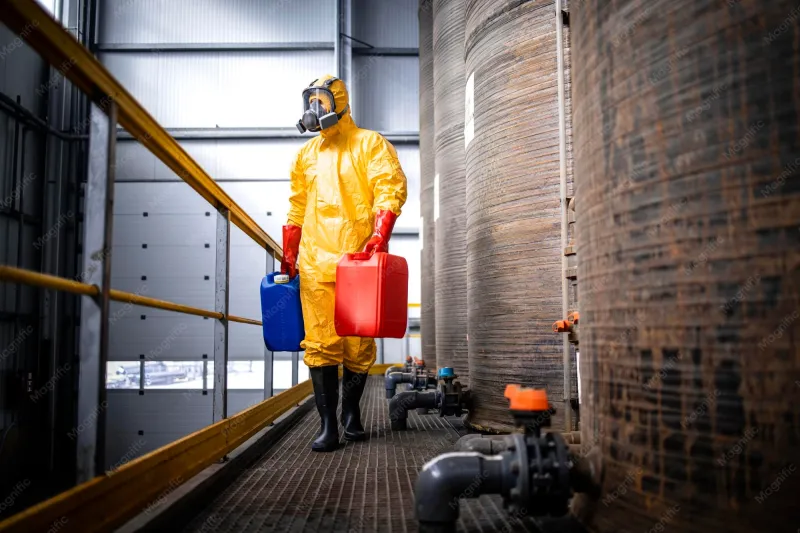
Laboratory technicians in histopathology departments typically undergo formaldehyde-specific safety training as part of their onboarding. Institutions often conduct air monitoring to verify that engineering controls are performing adequately. Personal protective equipment — including nitrile gloves, chemical splash goggles, and in some settings, half-face respirators — is standard issue in environments where formalin solutions are handled in volume.
The scientific community has also invested in developing reduced-formaldehyde and formaldehyde-free fixation alternatives, driven in part by concerns about occupational exposure. Products using glyoxal, zinc-based compounds, or proprietary polymer solutions have entered the market and gained traction in some research settings. However, these alternatives have not yet demonstrated the same breadth of compatibility with downstream molecular analyses — including the FFPE-based genomic studies that have become central to precision oncology — and adoption remains uneven across US research institutions.
What Is at Stake if Formaldehyde Were Removed
The question of what cancer research would look like without formaldehyde is not entirely hypothetical — it is one that laboratory directors and pathology chiefs have begun to take seriously as regulatory pressure on chemical use has intensified. The honest answer is that the field would face significant disruption.
Decades of validated laboratory protocols are built around formalin fixation. The reagents, staining techniques, molecular assays, and diagnostic reference standards that oncologists rely on were developed and calibrated with FFPE tissue in mind. Transitioning to alternative fixatives would require revalidation of an enormous number of clinical and research workflows, a process that would take years and consume substantial resources — resources that might otherwise fund direct cancer research.
This is not an argument for complacency about exposure risk. It is a recognition that the scientific infrastructure supporting cancer detection and treatment has been constructed, over generations, with formaldehyde as a foundational material. Replacing it responsibly requires more than an alternative chemistry; it requires an alternative ecosystem.
Holding Two Truths Simultaneously
The formaldehyde paradox in cancer research is, at its core, a challenge of scientific literacy. It asks the public — and policymakers — to hold two truths simultaneously: that a substance can be genuinely hazardous and genuinely indispensable, that managing risk is not the same as eliminating it, and that the laboratory where a cure is being sought operates under many of the same chemical realities as the industries we are more comfortable criticizing.
For the patients whose biopsies are preserved in formalin, whose tumor samples feed the genomic databases that guide treatment decisions, and whose oncologists depend on a century of pathology practice built on formaldehyde chemistry, the paradox is not merely academic. It is, in a very real sense, the reason a diagnosis is possible at all.