Effective but Untouchable: Why Municipal Water Systems Have Quietly Ruled Out Formaldehyde
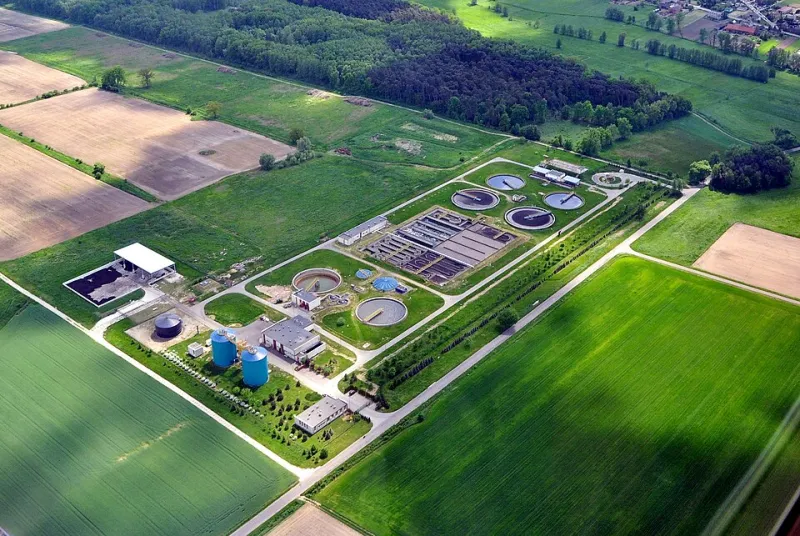
Photo: Stiopa, CC BY-SA 3.0, via Wikimedia Commons
Formaldehyde occupies an unusual position in the catalog of industrial chemicals: it is simultaneously one of the most versatile biocides known to science and one of the least socially acceptable tools available to public health engineers. In virtually every sector where microbial control matters — medical device sterilization, food preservation, laboratory specimen management — formaldehyde has carved out a defensible niche. Yet when it comes to municipal drinking water, the compound is conspicuously absent. No American water utility employs it. No serious regulatory proposal has ever advanced it. The question worth examining is not whether formaldehyde could disinfect water, but why the industry has arrived at such a firm and unspoken consensus that it never will.
What Makes Formaldehyde Effective Against Microorganisms
To understand the paradox, it helps to start with the chemistry. Formaldehyde (HCHO) is a potent cross-linking agent that disrupts microbial function by reacting with proteins and nucleic acids, effectively disabling the cellular machinery that pathogens depend on for reproduction and survival. At sufficient concentrations, it is lethal to bacteria, viruses, and fungi alike — a broad-spectrum efficacy that few disinfectants can match across all three categories simultaneously.
In controlled industrial environments, this property is exploited routinely. Hospitals use formaldehyde-based solutions to sterilize equipment. Embalmers rely on it to arrest biological decomposition. Manufacturers of certain vaccines use it to inactivate viral agents before final formulation. The molecule's reactivity, the very characteristic that makes it dangerous at high exposure levels, is precisely what makes it so effective at killing things that should not be alive in a water supply.
The Regulatory Framework That Closes the Door
Despite this efficacy, the regulatory landscape governing US drinking water makes formaldehyde's use as a primary or secondary disinfectant essentially impossible under current law. The Safe Drinking Water Act (SDWA), administered by the Environmental Protection Agency, establishes maximum contaminant levels (MCLs) for a wide range of substances — and formaldehyde sits firmly on the wrong side of that ledger.
The EPA classifies formaldehyde as a probable human carcinogen based on sufficient evidence from inhalation studies, and while the primary exposure route in drinking water would be ingestion rather than inhalation, the agency's risk framework does not treat the two pathways as fully independent. The EPA has set a Maximum Contaminant Level Goal (MCLG) for formaldehyde in drinking water, signaling that any detectable presence above background levels represents an undesirable outcome rather than an acceptable trade-off.
This creates a logical impossibility for utilities: to use formaldehyde as a disinfectant, they would need to introduce it into the distribution system at concentrations sufficient to kill pathogens, but those same concentrations would almost certainly trigger MCL violations. The regulatory architecture, in short, was never designed to accommodate formaldehyde as a treatment agent — and there is no active effort to redesign it.
The Disinfection Byproduct Problem
Even if regulators were inclined to reconsider formaldehyde's status, a separate technical barrier would complicate the picture significantly. Water treatment chemistry does not occur in isolation. When disinfectants interact with naturally occurring organic matter in source water — humic acids, fulvic acids, and other dissolved compounds — they produce disinfection byproducts (DBPs), many of which carry their own toxicological profiles.
Formaldehyde is already recognized as a DBP in its own right. It forms as a secondary product when ozone — a disinfectant that utilities do use — reacts with organic matter in raw water. The EPA regulates certain DBP categories under the Stage 1 and Stage 2 Disinfectants and Disinfection Byproducts Rules, and formaldehyde's presence as an unwanted byproduct of ozonation is itself a monitoring concern for utilities. Deliberately introducing formaldehyde as a primary disinfectant would dramatically amplify this problem, generating byproduct cascades that current treatment technology is not designed to manage.
Public Trust as an Invisible Constraint
Beyond the regulatory and chemical engineering barriers lies a consideration that rarely appears in technical literature but shapes utility decision-making profoundly: public perception. Drinking water is arguably the most politically sensitive public utility in the United States. Controversies over lead contamination in Flint, Michigan, and chloramination debates in cities across the country have demonstrated repeatedly that public confidence in water systems is fragile and slow to rebuild once damaged.
Formaldehyde carries a cultural weight that few industrial chemicals can match. It is associated, in the popular imagination, with funeral homes, biology classrooms, and cancer warnings on product labels. The prospect of a municipal utility announcing that it was treating tap water with formaldehyde — even at concentrations orders of magnitude below any plausible harm threshold — would generate public relations consequences that no utility board would willingly invite. In this sense, the barrier is not purely scientific. It is sociological, and arguably just as binding as any EPA regulation.
What Utilities Use Instead — and Why Those Choices Carry Their Own Complications
The disinfectants that American utilities actually rely upon — chlorine, chloramines, ozone, and ultraviolet light — each represent their own set of trade-offs. Chlorine, the workhorse of US water treatment since the early twentieth century, is effective and inexpensive but produces trihalomethanes and haloacetic acids as byproducts, both of which are regulated carcinogens. Chloramines reduce some DBP categories but introduce others, including N-nitrosodimethylamine (NDMA). Ozone is highly effective but, as noted, generates formaldehyde as a byproduct and requires significant capital investment. UV treatment inactivates pathogens without chemical residue but provides no lasting disinfection in the distribution system.
None of these alternatives is without limitation. The field of drinking water treatment is, in many respects, a discipline of managed imperfection — selecting the option whose risks are best understood, most controllable, and most defensible to regulators and the public alike. Formaldehyde fails that last criterion decisively, regardless of its technical merits.
A Window Into How Risk Perception Shapes Infrastructure Decisions
The formaldehyde case in water treatment is instructive precisely because it illustrates how public health decisions are rarely made on efficacy alone. A chemical can be demonstrably effective, technically feasible to deploy, and still be functionally off the table because the regulatory environment, the byproduct chemistry, and the expectations of a skeptical public have collectively foreclosed the option.
For water quality engineers and regulatory professionals, this dynamic is well understood, if seldom discussed openly. For the general public, it offers a useful reminder that the chemicals not used in infrastructure systems are sometimes as deliberately chosen as the ones that are — and that those choices reflect a complex negotiation between science, law, economics, and the harder-to-quantify demands of social acceptability.
Formaldehyde's absence from American water treatment is not an oversight. It is a decision, arrived at through multiple converging pressures, and it is unlikely to change.