Eight Hours a Day, Every Day: The Hidden Formaldehyde Burden Carried by Nail Salon Workers
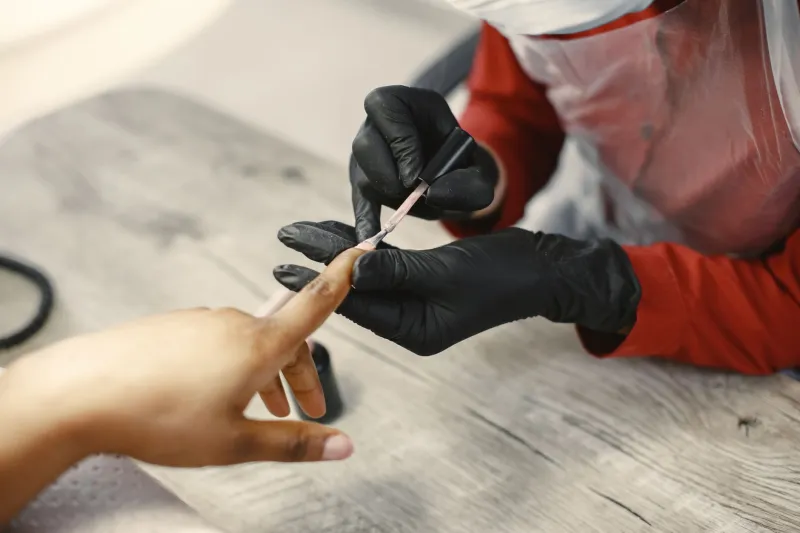
For most Americans, a trip to the nail salon is a routine act of self-care — an hour of relative leisure that ends with polished nails and, perhaps, a mild awareness of chemical odors in the air. That awareness fades the moment they step outside. For the technician who performed the service, however, the exposure does not end. It resumes the next morning, and the morning after that, accumulating across a working career that may span decades.
This asymmetry — between the transient exposure of a customer and the chronic exposure of a worker — sits at the heart of what public health researchers have come to regard as an underexamined occupational health crisis. Formaldehyde, a compound well-documented as a human carcinogen at sufficient concentrations, is present in a range of nail products, most notably nail hardeners, some gel formulations, and certain base coats. The disparity in how that exposure affects customers versus workers is not merely a matter of duration. It is a matter of regulatory architecture, economic vulnerability, and the persistent invisibility of a workforce that is, by demographic, predominantly immigrant women of color.
What the Products Actually Contain
Formaldehyde's role in nail care is not incidental. In nail hardeners, it functions as a cross-linking agent, bonding keratin proteins together to strengthen the nail plate. Products marketed under names referencing "hardening" or "strengthening" have historically relied on formaldehyde concentrations ranging from one to five percent — levels that, under salon conditions, can generate measurable airborne concentrations through evaporation during application.
Beyond direct formaldehyde content, a category of compounds known as formaldehyde-releasing preservatives appears in some nail products as antimicrobial agents. These substances — including tosylamide/formaldehyde resin, a film-forming ingredient common in conventional nail lacquers — release formaldehyde gradually, creating exposure pathways that are less immediately obvious but no less real over cumulative time.
The distinction matters because formaldehyde-releasing ingredients do not always trigger the same labeling scrutiny as formaldehyde itself. A technician reading a product label may have no practical means of identifying every compound that will generate formaldehyde vapor during use.
What the Data Shows
The Occupational Safety and Health Administration (OSHA) sets a permissible exposure limit (PEL) for formaldehyde at 0.75 parts per million (ppm) as an eight-hour time-weighted average, with a short-term exposure limit of 2 ppm over any fifteen-minute period. These thresholds were established to protect workers from the compound's acute irritant effects and its established carcinogenicity.
Air quality measurements conducted in nail salons have produced findings that vary considerably depending on salon size, ventilation quality, product mix, and the number of active workstations. Studies published in peer-reviewed environmental health literature have recorded formaldehyde concentrations in nail salons ranging from levels well below the OSHA PEL to levels that approach or, in poorly ventilated establishments, exceed it. Critically, even concentrations below the regulatory threshold carry documented health implications for workers whose exposure is continuous over years rather than hours.
The National Institute for Occupational Safety and Health (NIOSH) has recommended a lower exposure limit of 0.016 ppm as a time-weighted average, a figure that reflects the carcinogenic risk profile of formaldehyde rather than merely its irritant effects. The gap between the OSHA PEL and the NIOSH recommendation is substantial, and for nail salon workers whose daily exposure falls between those two figures, the regulatory framework offers limited protection.
The Structural Barriers to Safer Conditions
Understanding why nail salon workers remain disproportionately exposed requires examining factors that extend well beyond chemistry. The industry's workforce demographics are a critical part of the picture. According to research from the nonprofit organization Nail Files and data compiled by state labor departments, a significant majority of nail salon workers in major U.S. markets are Vietnamese immigrant women. Language barriers, immigration status concerns, limited familiarity with U.S. labor law, and economic precarity all function as structural deterrents to reporting unsafe conditions or demanding protective measures.
Ventilation infrastructure is another persistent problem. Effective control of formaldehyde vapor in nail salons requires local exhaust ventilation — systems that capture airborne chemicals at the source before they disperse into the breathing zone of workers and clients alike. General ventilation, such as overhead fans or open windows, is substantially less effective and is the approach most commonly found in small, independent salons operating on tight margins. Installing and maintaining proper local exhaust systems carries upfront costs that many small business owners in this sector cannot easily absorb.
Regulatory enforcement compounds these challenges. OSHA's inspection capacity is finite, and the agency's compliance history in nail salons reflects the broader challenge of enforcing occupational health standards across a fragmented industry composed largely of small establishments. State-level occupational safety programs vary widely in their prioritization of salon inspections. In many jurisdictions, nail salon workers have little realistic expectation of a routine OSHA visit.
The Health Consequences Over Time
The medical literature on formaldehyde's health effects is extensive. At acute exposure levels, formaldehyde causes irritation of the eyes, nose, throat, and respiratory tract — symptoms that many nail salon workers report as daily occurrences they have come to regard as simply part of the job. At higher concentrations and over prolonged exposure periods, formaldehyde is classified as a Group 1 human carcinogen by the International Agency for Research on Cancer (IARC), with established associations with nasopharyngeal cancer and leukemia.
For workers with years of daily exposure, the cumulative risk profile differs meaningfully from that of an occasional customer. Several epidemiological studies have examined cancer incidence and respiratory health outcomes among nail salon workers specifically, with findings that point toward elevated rates of certain adverse health outcomes compared to the general population. The research base, while growing, remains limited by the difficulty of conducting large-scale studies in a workforce that is mobile, often unregistered, and historically reluctant to engage with formal health systems.
Skin sensitization is an additional concern. Formaldehyde is a known skin sensitizer, and repeated dermal contact — through handling products or working in environments with elevated airborne concentrations — can induce allergic contact dermatitis, a condition that, once established, may persist indefinitely.
What Reform Would Require
Advocates for nail salon worker health have proposed a range of interventions, from mandatory ventilation standards specific to the salon industry to product disclosure requirements that would make formaldehyde and formaldehyde-releasing ingredients immediately identifiable on professional product labels. Some state legislatures, notably New York and California, have moved toward stronger protections, including initiatives to phase out the most hazardous chemicals from salon products and to fund ventilation retrofits in small establishments.
At the federal level, meaningful progress would require either an update to OSHA's formaldehyde PEL — bringing it closer to the NIOSH recommendation — or targeted enforcement initiatives that treat nail salons as a priority sector. Neither development appears imminent, though advocacy organizations continue to press both regulatory agencies and product manufacturers for change.
In the interim, the burden of protection falls largely on individual workers, many of whom lack the resources, information, or institutional support to advocate effectively for safer conditions. That reality is, in itself, a form of regulatory failure — one that this industry and its oversight bodies have yet to fully reckon with.
For a compound as well-studied as formaldehyde, the persistence of this occupational health gap is not a scientific problem. It is a policy problem, and the workers who absorb that gap in their lungs and skin every working day deserve a more serious answer than the one they have received.