Same Molecule, Two Stories: The Science Behind Formaldehyde's Medical Value and Its Health Risks

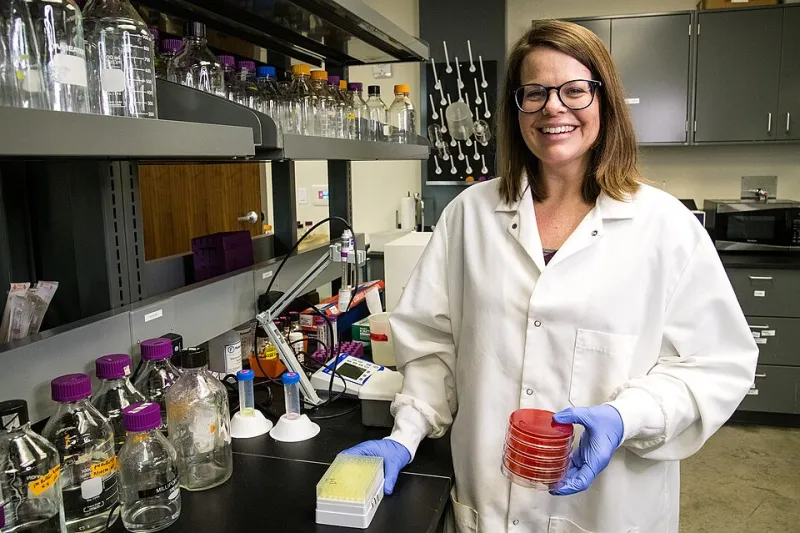
Photo: pathology laboratory tissue specimen formaldehyde formalin medical research, via www.mopec.com
Formaldehyde occupies a peculiar position in modern medicine. It is simultaneously one of the most relied-upon substances in clinical and research settings and one of the most scrutinized chemicals on federal regulatory watchlists. Understanding why requires looking closely at the molecule itself—not as a villain or a hero, but as a compound whose properties serve radically different purposes depending on concentration, context, and the biology of the person exposed to it.
Why Medicine Cannot Easily Walk Away
The fixation properties of formaldehyde are, from a biochemical standpoint, elegant. When tissue is immersed in a formalin solution—typically a 10 percent buffered formaldehyde preparation—the compound forms cross-links between proteins, effectively halting decomposition and locking cellular architecture in place. For pathologists examining biopsy samples, this is not a convenience; it is a prerequisite for accurate diagnosis. The structural integrity that formaldehyde preserves allows clinicians to distinguish between malignant and benign tissue with a degree of reliability that alternative fixatives have not consistently matched.
In transplant medicine, the stakes are similarly high. Organs and tissues destined for transplantation or long-term storage often pass through preservation protocols that include formaldehyde-based solutions. Heart valves, skin grafts, and bone allografts are among the products that depend on formaldehyde's antimicrobial and stabilizing properties to remain viable through processing and storage. Researchers at academic medical centers across the United States continue to investigate next-generation preservation techniques, but the transition away from formaldehyde-based methods has proven slow, partly because the alternatives frequently introduce their own tradeoffs in efficacy or cost.
Anatomy education represents yet another domain of dependence. Medical and dental schools rely on cadaveric specimens preserved with formaldehyde-containing solutions to train the next generation of practitioners. The hands-on experience that dissection provides is widely considered irreplaceable in professional training, and no synthetic or digital substitute has achieved equivalent acceptance across US medical education programs.
The Chemistry That Cuts Both Ways
The same reactivity that makes formaldehyde a superb fixative is precisely what makes it biologically hazardous at elevated exposures. Formaldehyde does not simply sit inert in tissue—it forms covalent bonds with biological macromolecules, including DNA. This reactivity, so useful in a specimen jar, becomes problematic inside a living organism when exposures exceed the body's capacity to metabolize and clear the compound.
It is worth noting that formaldehyde is not purely an external threat. The human body produces it endogenously as a byproduct of normal metabolic processes, and blood levels in unexposed individuals typically hover around 2 to 3 parts per million. This baseline has been central to arguments from some industry stakeholders that low-level external exposures are inconsequential. However, researchers caution that endogenous production and exogenous exposure are not simply additive in a linear way—the tissues most directly exposed to inhaled or dermally absorbed formaldehyde, such as the nasal passages, may experience localized concentrations that exceed what systemic blood measurements suggest.
What the Research Actually Shows
The International Agency for Research on Cancer classified formaldehyde as a Group 1 carcinogen—meaning there is sufficient evidence of carcinogenicity in humans—based primarily on studies of occupational cohorts with high, prolonged exposures. The strongest associations identified in the epidemiological literature link formaldehyde exposure to nasopharyngeal cancer and, more controversially, to leukemia, particularly myeloid leukemia.
The leukemia connection has generated considerable scientific debate. Critics of the classification argue that the biological plausibility of a leukemia link is weak because formaldehyde is metabolized so rapidly in nasal and upper respiratory tissues that meaningful quantities are unlikely to reach bone marrow. Proponents counter that some studies have detected DNA damage in white blood cells of exposed workers, suggesting that systemic effects cannot be ruled out. The National Cancer Institute's long-term studies of industrial workers exposed to formaldehyde remain among the most cited data sets, and they continue to be reanalyzed as statistical methods evolve.
Exposure thresholds are where much of the practical regulatory action takes place. The Occupational Safety and Health Administration currently sets the permissible exposure limit for formaldehyde at 0.75 parts per million as an eight-hour time-weighted average, with an action level of 0.5 ppm. The National Institute for Occupational Safety and Health recommends a ceiling of 0.1 ppm, reflecting a more precautionary interpretation of the available evidence. This gap between regulatory thresholds is itself a signal of the genuine scientific uncertainty that persists.
Vulnerability Is Not Uniform
Not all workers and patients face equivalent risk, and researchers have increasingly focused on identifying vulnerability factors that modify individual response to formaldehyde exposure. Genetic polymorphisms affecting the activity of alcohol dehydrogenase 3, an enzyme involved in formaldehyde metabolism, appear to influence susceptibility. Individuals with certain variants of this enzyme may clear formaldehyde less efficiently, potentially increasing their risk at a given exposure level.
Asthma and other pre-existing respiratory conditions are also recognized as vulnerability factors. Formaldehyde is a known respiratory irritant at concentrations well below those associated with carcinogenic risk, and individuals with reactive airways may experience symptoms—including bronchoconstriction and exacerbated asthma—at levels that would be subclinical for healthy adults. Healthcare workers, funeral directors, and laboratory technicians who spend careers in formaldehyde-adjacent environments are the populations most closely monitored by occupational health researchers.
How the Medical Community Is Responding
Awareness of these risks has translated into meaningful changes in practice, even if formaldehyde has not been eliminated from medical settings. Engineering controls—including local exhaust ventilation systems installed directly at tissue grossing stations in pathology labs—have substantially reduced ambient air concentrations in many hospital environments. Personal protective equipment protocols have been updated at institutions following OSHA's formaldehyde standard, and biological monitoring programs that test workers' urine for formic acid metabolites are increasingly common at larger academic medical centers.
On the research side, efforts to develop formaldehyde-free or formaldehyde-reduced fixation protocols are ongoing. Glyoxal-based fixatives have shown promise in some histological applications, and paraformaldehyde-free alternatives are being evaluated for specific research uses. The challenge is that any substitute must clear a high bar: it must preserve tissue architecture with comparable fidelity, be compatible with the full range of downstream diagnostic techniques including immunohistochemistry, and be economically viable for routine clinical use.
The trajectory of this work suggests that formaldehyde's role in medicine will narrow over time rather than disappear abruptly. Where alternatives prove equivalent, adoption will likely follow. Where they do not, formaldehyde will remain—accompanied by increasingly rigorous exposure management rather than elimination.
A Paradox With No Simple Resolution
The scientific debate surrounding formaldehyde is not a dispute between those who understand it and those who do not. It is a genuine reckoning with a molecule that saves lives through the very properties that, under different conditions, threaten them. The medical community's response—continued use paired with continuous improvement in exposure controls—reflects a rational weighing of documented benefits against quantifiable risks, conducted in an environment of incomplete certainty.
For workers in affected industries, that uncertainty is not merely academic. It is a daily reality navigated through ventilation systems, protective gear, and monitoring programs. For patients who benefit from preserved tissue diagnoses or transplanted organs, the calculus is different but equally real. Formaldehyde's story in medicine is, in this sense, a case study in the complexity that responsible science communication must be willing to hold without simplifying.