Embalming at a Crossroads: The Funeral Industry Reckons With Its Reliance on Formaldehyde
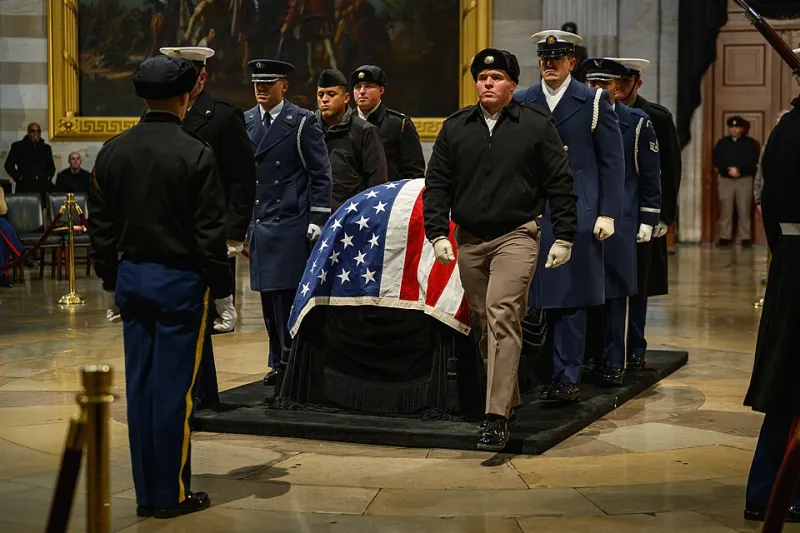
Photo: Henry Villarama, Public domain, via Wikimedia Commons
In the back rooms of funeral homes across the United States, a quiet transformation is underway. Embalmers who spent decades working confidently with formaldehyde-based arterial fluids are now fielding questions they rarely encountered before: from families asking about chemical-free preparation, from regulators tightening occupational exposure limits, and from a new generation of funeral directors who trained in an era when green burial was a legitimate professional conversation rather than a fringe concern.
Formaldehyde's dominance in American embalming is not accidental. It is the product of more than a century of institutional practice, cultural expectation, and genuine chemical utility. Understanding why the industry is changing—and why that change is happening so slowly—requires an honest accounting of what formaldehyde does, who it affects, and what might plausibly take its place.
Why Formaldehyde Became the Standard
Formaldehyde's role in embalming stems from a property that no other widely available compound fully replicates: its ability to cross-link proteins in biological tissue, effectively halting decomposition by rendering cellular structures chemically inert. When injected arterially and supplemented with cavity treatment, a formaldehyde-based embalming solution can preserve a body for a week or longer under typical conditions—sufficient time for transportation, viewing, and funeral services.
This capability became institutionally significant during the American Civil War, when battlefield embalming allowed the bodies of Union soldiers to be returned to their families across significant distances. The practice, once associated with medical demonstration, entered the civilian mainstream and became the foundation upon which the modern American funeral industry was constructed.
Today, the National Funeral Directors Association (NFDA) estimates that embalming is performed on approximately 50% of deceased individuals in the United States—a figure that represents both a cultural preference for open-casket viewing and a practical requirement for families coordinating services across state lines or international borders, where health regulations frequently mandate preservation.
The Occupational Health Dimension
The case for reconsidering formaldehyde is perhaps most urgent not in the funeral home viewing room but in the preparation room, where licensed embalmers work in close, sustained proximity to the chemical.
Formaldehyde is classified as a known human carcinogen by the International Agency for Research on Cancer (IARC) and as a probable human carcinogen by the EPA. Studies of funeral industry workers have found elevated rates of myeloid leukemia and nasopharyngeal cancer compared to the general population, findings that have been incorporated into regulatory frameworks governing occupational exposure.
OSHA's current permissible exposure limit (PEL) for formaldehyde in the workplace is 0.75 ppm as an eight-hour time-weighted average, with a short-term exposure limit of 2 ppm. In practice, preparation rooms that lack adequate ventilation or where embalmers work without proper respiratory protection can exceed these thresholds during active embalming procedures.
Jennifer Aldrich, a licensed embalmer and funeral director with more than twenty years of experience at a family-owned funeral home in rural Ohio, describes the occupational reality plainly. "When I started, you didn't think much about it. The smell was just part of the job. Now I wear a respirator every time I work, and I make sure my staff does too. The research caught up with what some of us suspected for a long time."
The Funeral Service Foundation has funded training initiatives aimed at improving ventilation standards and personal protective equipment compliance across independent funeral homes, which make up the majority of US funeral businesses. Yet implementation is uneven, particularly in smaller operations where capital investment in ventilation infrastructure is a significant financial burden.
The Rise of Alternatives—and Their Limitations
The search for formaldehyde alternatives in embalming is not new, but it has gained genuine momentum over the past decade. Several product categories have emerged as partial substitutes.
Glutaraldehyde-Based Formulations: Glutaraldehyde is a dialdehyde compound that, like formaldehyde, cross-links proteins and provides tissue fixation. It is already present in many commercial embalming fluids as a co-preservative. Higher-glutaraldehyde, lower-formaldehyde formulations have been adopted by some funeral homes seeking to reduce chemical exposure without abandoning conventional embalming. The trade-off is notable: glutaraldehyde carries its own toxicity concerns and can cause skin sensitization and respiratory irritation, meaning it is a harm-reduction measure rather than a clean alternative.
Formalin-Free Arterial Fluids: A handful of manufacturers now market arterial fluids that use combinations of phenol, alcohol, and other biocidal agents in place of formaldehyde. Industry reviews of these products are mixed. Some embalmers report adequate short-term preservation for local services, while others find that tissue firmness and color restoration—cosmetically important for open-casket viewing—fall short of formaldehyde-based results. For families who require extended preservation or long-distance transport, these formulations have generally not proven sufficient.
Refrigeration: Unembalmed refrigeration is increasingly offered by funeral homes as an alternative to chemical preservation, particularly for families who prefer natural burial or cremation. Modern refrigeration units can maintain body temperature at approximately 34°F to 38°F, effectively slowing decomposition for several days. This approach is well-suited to direct cremation or green burial timelines but is not a practical substitute for families planning traditional services with multiple days of viewing.
Green Burial and the Cultural Shift
Perhaps the most structurally significant challenge to formaldehyde's dominance in the funeral industry is not regulatory pressure or occupational health policy—it is a shift in consumer values.
The Green Burial Council, a US-based nonprofit, currently certifies more than 300 burial grounds and funeral providers across the country that meet standards prohibiting embalming chemicals, metal caskets, and concrete burial vaults. Membership in the organization has grown steadily over the past decade, tracking broader consumer interest in environmentally conscious end-of-life planning.
For green burial, the absence of formaldehyde is not merely a preference but a requirement: chemically embalmed remains introduce synthetic compounds into the soil, potentially affecting the microbial ecosystems that facilitate natural decomposition. Certified green burial grounds will not accept embalmed remains.
This creates a market dynamic that is beginning to reshape how some funeral homes structure their service offerings. "We added a green burial package three years ago," says Marcus Webb, who operates a mid-sized funeral home in Portland, Oregon. "Initially it was maybe five percent of our families. Now it's closer to eighteen. People are coming in having already decided. They've done their research."
Newer disposition methods—including alkaline hydrolysis (sometimes called water cremation or aquamation) and human composting, now legal in a growing number of states—further reduce the relevance of traditional embalming, as neither process requires prior chemical preservation.
Why Formaldehyde Is Not Going Away
Despite these pressures, formaldehyde is unlikely to disappear from American funeral practice in the near term. Several structural factors sustain its position.
First, the cultural expectation of open-casket viewing remains strong across large segments of the US population, particularly within African American, Latino, and many religious communities where seeing the deceased in a preserved, presentable state is a meaningful component of mourning ritual. No currently available alternative delivers the cosmetic results that formaldehyde-based embalming provides at scale.
Second, regulatory requirements for interstate and international transport of human remains frequently specify chemical preservation as a condition of transport, embedding formaldehyde into logistical frameworks that are slow to change.
Third, the economics of funeral home operation—where profit margins on embalming services subsidize other aspects of the business—create financial disincentives for rapid transition.
The most credible path forward, according to many industry observers, is not replacement but reduction: lower-concentration formulations, improved ventilation, rigorous PPE compliance, and expanded consumer education about alternatives. Formaldehyde's paradox is that it remains, simultaneously, a public health concern and an irreplaceable tool—a tension the American funeral industry will be navigating for years to come.