Clinical Necessity vs. Public Anxiety: How Formaldehyde Remains Central to Modern Medicine
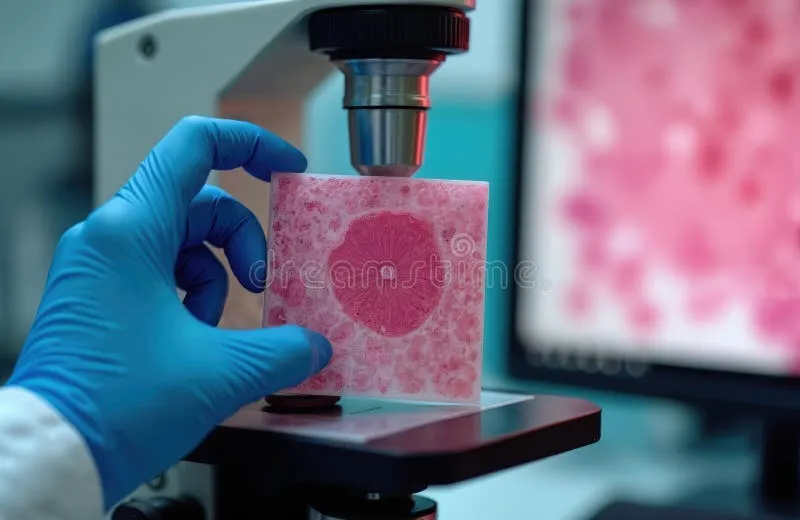
Photo: pathology laboratory tissue samples microscope medical research, via thumbs.dreamstime.com
Formaldehyde carries a peculiar burden in the American public imagination. It is simultaneously the chemical that preserves frogs in high school biology classrooms and the one listed on hazard warning sheets in industrial settings. Yet in the controlled corridors of hospitals, research institutions, and pharmaceutical manufacturing plants, the same molecule is handled with careful precision—not reluctantly, but because the science demands it.
Understanding why requires moving past the simplified narrative that formaldehyde is merely a toxin to be avoided, and engaging with the more nuanced reality that context, concentration, and application determine whether a chemical is harmful or essential.
Formaldehyde in Vaccine Production: A Misunderstood Ingredient
One of the most publicly contentious uses of formaldehyde in medicine is its role in vaccine manufacturing. The compound is used during the production of certain inactivated vaccines—including those for influenza, polio, and hepatitis A—to kill or weaken pathogens so they can no longer cause disease while still triggering an immune response.
The residual formaldehyde present in finished vaccines is measured in micrograms. To put that in perspective, the human body naturally produces and metabolizes formaldehyde as a normal byproduct of cellular metabolism. A single pear contains significantly more formaldehyde than an entire vaccine dose. The FDA monitors residual levels in licensed vaccines, and the scientific consensus, supported by decades of clinical data, holds that these trace amounts pose no meaningful health risk.
Dr. Paul Offit of the Children's Hospital of Philadelphia has noted in published interviews that the fear surrounding formaldehyde in vaccines reflects a broader public misunderstanding of dose-response relationships—the foundational toxicological principle that the dose makes the poison. Medical professionals working in immunology and virology point out that no functional alternative has been demonstrated to inactivate pathogens as reliably and cost-effectively at scale.
Pathology and Tissue Fixation: The Diagnostic Backbone
In pathology laboratories across the country, a 10 percent neutral buffered formalin solution—which contains approximately 3.7 to 4 percent formaldehyde—remains the gold standard for tissue fixation. When a surgeon removes a tumor, a biopsy sample, or a section of diseased tissue, that specimen must be preserved rapidly and precisely for accurate diagnosis.
Formaldehyde works by cross-linking proteins within cells, effectively halting biological decomposition while maintaining cellular architecture. This allows pathologists to study tissue under a microscope with a fidelity that has guided cancer diagnoses, surgical margins, and treatment decisions for more than a century.
"The structural preservation you get with formalin fixation is still unmatched for routine histopathology," explains one board-certified pathologist practicing at a major academic medical center in the Midwest. "We use it because our diagnostic accuracy depends on it."
Alternative fixatives—including glutaraldehyde, zinc-based solutions, and various proprietary formulations—have been developed and studied. Some offer advantages for specific molecular testing applications. However, none has fully replicated formalin's combination of cost, reliability, compatibility with downstream staining protocols, and long-term tissue stability across the full spectrum of diagnostic needs.
Occupational Exposure and the Regulatory Framework
The continued use of formaldehyde in clinical settings does not exist without oversight. The Occupational Safety and Health Administration (OSHA) enforces strict permissible exposure limits for workers in healthcare and laboratory environments. The current OSHA permissible exposure limit is 0.75 parts per million (ppm) as an eight-hour time-weighted average, with a short-term exposure limit of 2 ppm.
Hospitals and diagnostic laboratories are required to implement engineering controls—including ventilated fume hoods and closed-specimen transport systems—conduct regular air monitoring, and provide personal protective equipment to staff. The National Institute for Occupational Safety and Health (NIOSH) classifies formaldehyde as a potential occupational carcinogen at prolonged high exposures, which is precisely why these controls exist.
The regulatory structure does not prohibit formaldehyde use in medicine. Instead, it acknowledges that the risk is manageable when exposure is controlled—a fundamentally different conclusion than a blanket prohibition would imply.
The Alternative Landscape: Promising but Incomplete
Research into formaldehyde-free alternatives in both vaccine production and tissue fixation is ongoing, and some advances have been meaningful. Certain recombinant protein vaccines and mRNA-based platforms—the latter gaining broad public attention through COVID-19 vaccines—do not require formaldehyde inactivation at all. As these platforms mature and expand to cover additional diseases, the role of formaldehyde in vaccine manufacturing may naturally diminish.
In pathology, formalin-free fixatives designed to preserve nucleic acids more effectively than traditional formalin are gaining traction in molecular diagnostics, where DNA and RNA integrity matters for genetic analysis. Some institutions have adopted these solutions for specific testing workflows.
However, researchers caution against overstating the readiness of these alternatives. Transitioning an entire pathology workflow requires validation studies, regulatory submissions, and significant capital investment. For community hospitals and smaller diagnostic labs, the practical barriers are substantial.
Reconciling Fear with Evidence
The formaldehyde paradox in medicine is, at its core, a communication challenge as much as a scientific one. The public's wariness is not irrational—formaldehyde is a genuine hazard at elevated concentrations, and the history of industrial chemical exposure in the United States includes real harms that were initially minimized.
But the medical applications of formaldehyde operate within a framework of controlled dosing, regulatory oversight, and evidence-based justification that is meaningfully different from uncontrolled environmental exposure. Physicians and researchers are not indifferent to the risks. They have weighed them against diagnostic accuracy, vaccine efficacy, and patient outcomes—and concluded, repeatedly, that the benefits justify continued use under rigorously managed conditions.
That conclusion may evolve as alternatives improve. But for now, formaldehyde remains embedded in the infrastructure of modern American medicine not out of inertia, but because the science has not yet produced a fully adequate substitute across all of its clinical roles.