Root Canals, Pulpotomies, and the Molecule Dentists Won't Give Up
For most Americans, the word "formaldehyde" conjures images of high school biology labs or news stories about toxic building materials. It is not a word they expect to encounter at the dentist's office. Yet for over a century, formaldehyde-based compounds have occupied a quiet but consequential role in clinical dentistry—one that the profession has been reluctant to abandon, and for reasons that go well beyond institutional inertia.
The chemistry is straightforward, even if the public conversation is not. Formaldehyde's capacity to fix proteins, sterilize tissue, and inhibit bacterial growth makes it exceptionally useful in procedures that demand both precision and sterility deep inside the tooth. The challenge, as with so many formaldehyde applications, is that the molecule's utility and its potential for harm are inseparable properties of the same compound.
Formocresol and the Pediatric Pulpotomy
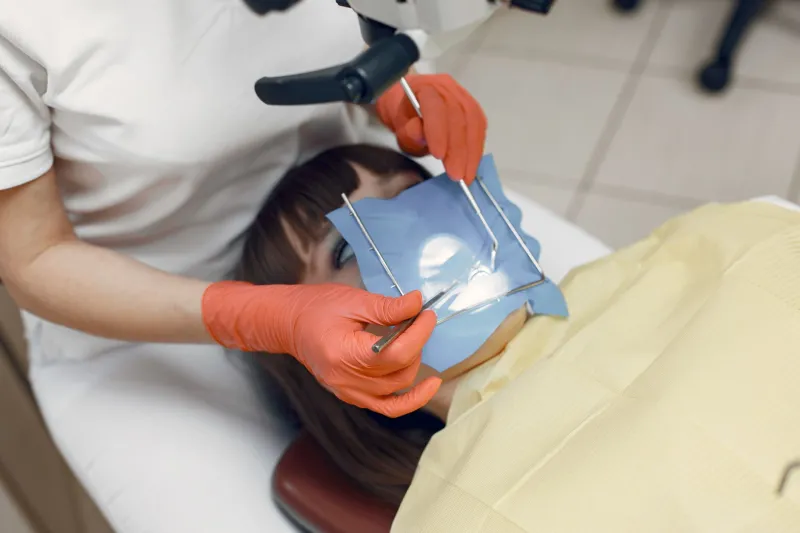
The most widely discussed formaldehyde application in dentistry involves a procedure most parents have never heard of: the pulpotomy. When a child's primary tooth develops deep decay that reaches the pulp—the soft, nerve-rich interior of the tooth—dentists often perform a pulpotomy rather than a full extraction. The goal is to preserve the tooth long enough to maintain spacing for the permanent tooth developing beneath it.
For decades, the standard medicament used in this procedure has been formocresol, a solution combining formaldehyde and cresol. Applied to the exposed pulp tissue, formocresol fixes the remaining vital tissue, effectively mummifying it in place and preventing bacterial reinfection. The technique works. Success rates in peer-reviewed literature have consistently ranged from 70 to over 90 percent across various follow-up periods, which is why the American Academy of Pediatric Dentistry has historically included it in clinical guidance.
The concern, however, is well-documented. Studies have demonstrated that formocresol does not stay put. The compound can be absorbed systemically, distributed to organs including the liver and kidneys, and—in animal models—has shown mutagenic potential. The International Agency for Research on Cancer classifies formaldehyde as a Group 1 carcinogen. That classification does not disappear simply because the exposure occurs in a dental chair.
Dental researchers acknowledge the tension directly. "We're not dismissing the toxicology," notes one endodontist affiliated with a major Midwestern dental school who has published on pulp medicaments. "But we're also treating a primary tooth in a six-year-old. The dose matters. The exposure duration matters. And the alternative—losing that tooth prematurely—has its own cascade of consequences."
What the Alternatives Actually Offer
The search for formocresol substitutes has been active and, in some respects, productive. Mineral trioxide aggregate, known as MTA, has gained considerable traction as a pulpotomy medicament since the late 1990s. Ferric sulfate, which works through a different mechanism—hemostasis rather than fixation—has also been widely studied. More recently, biodentine and other calcium silicate-based materials have entered clinical discussion.
These alternatives are not without merit. MTA, in particular, has demonstrated strong biocompatibility and favorable outcomes in multiple randomized controlled trials. Several dental schools in the United States have shifted their teaching protocols toward MTA or ferric sulfate as first-line options.
But the transition has not been universal, and the reasons are partly practical. MTA is significantly more expensive than formocresol. It requires longer setting times, which complicates pediatric cases where chair time is already difficult to manage. It is also technique-sensitive in ways that formocresol is not. In underserved communities where access to dental care is already strained, cost and procedural complexity are not trivial concerns.
"The evidence for alternatives is good," acknowledges a pediatric dentist practicing in rural Tennessee. "But good evidence and widespread adoption are two different things. I see kids who haven't been to a dentist in three years. I need something reliable that I can place quickly."
Formaldehyde in Root Canal Sealers
Beyond pulpotomies, formaldehyde compounds appear in endodontic sealers—the materials used to fill the space between the solid gutta-percha core and the walls of a root canal. Certain paraformaldehyde-containing sealers, including products in the N2 and Endomethasone families, have been used in endodontic practice for decades, particularly in Europe but also in portions of the American market.
These materials are controversial within the profession itself. Critics point to documented cases of periapical tissue damage, nerve injury, and persistent pain associated with paraformaldehyde-based sealers when the material extrudes beyond the root apex. The American Association of Endodontists has expressed reservations about their use, and the FDA has raised questions about the regulatory status of some formaldehyde-containing endodontic products.
Proponents argue that when confined within the root canal system, these sealers offer antimicrobial properties and tissue-fixation capabilities that alternative sealers—typically epoxy resin-based or calcium silicate-based—do not fully replicate. The debate within endodontics reflects a broader pattern: formaldehyde-based products tend to persist in clinical practice not because dentists are indifferent to safety, but because their performance characteristics are genuinely difficult to match.
Disinfection and Instrument Sterilization
Formaldehyde's role extends further still into dental infection control. Formalin solutions have historically been used to disinfect dental instruments and operatory surfaces, though the adoption of autoclave sterilization and glutaraldehyde-based high-level disinfectants has substantially reduced this application in modern U.S. practice. OSHA's Formaldehyde Standard (29 CFR 1910.1048) applies to dental offices where formaldehyde exposure may occur, requiring exposure monitoring and hazard communication where applicable.
The regulatory framework, in other words, already treats dental settings as potential formaldehyde exposure environments. Whether that framework is consistently applied in smaller private practices is a question that dental safety researchers have raised, though data on compliance across the roughly 200,000 dental practices operating in the United States remains limited.
The Conversation Dentists Aren't Having With Patients
Perhaps the most striking aspect of formaldehyde's role in dentistry is how rarely it surfaces in the patient-provider conversation. Parents consenting to their child's pulpotomy are unlikely to be told that formocresol contains formaldehyde. Patients undergoing root canals are rarely informed of the specific sealer being used. This is not necessarily a failure of informed consent in the legal sense—material selection is generally considered within the scope of clinical judgment—but it does create a disconnect between public anxiety about formaldehyde and its routine presence in dental care.
As alternative materials continue to improve and accumulate long-term outcome data, the profession may gradually shift away from formaldehyde-based compounds. The trajectory in pediatric dentistry, at least, appears to be moving in that direction. But the pace of that transition will be shaped not only by science, but by economics, training infrastructure, and the persistent gap between what clinical research recommends and what practicing dentists find workable on a Tuesday afternoon with a frightened eight-year-old in the chair.
Formaldehyde has endured in dentistry for the same reason it has endured across medicine and industry: it is exceptionally good at what it does. The question the profession continues to grapple with is whether "exceptionally good" remains a sufficient answer when better alternatives exist—and when the patient asking the question is a child.