The Chemical That Built Modern Pathology — And Still Has No Equal
Every cancer diagnosis made from a tissue biopsy, every tumor margin assessed before surgery, every post-mortem examination that produces a definitive cause of death — the vast majority of these outcomes trace back to a solution of formaldehyde in water. Formalin, as it is commonly called in clinical settings, has been the foundational preservation medium in histology and anatomic pathology for well over a hundred years. That longevity is not the product of institutional inertia or regulatory neglect. It reflects a chemical reality that researchers, pathologists, and laboratory engineers have been struggling to work around for decades without success.
The paradox is this: formaldehyde is a known human carcinogen, classified as such by the International Agency for Research on Cancer and acknowledged as an occupational hazard by OSHA, which sets a permissible exposure limit of 0.75 parts per million over an eight-hour workday. Yet pathology laboratories across the United States continue to use it in large volumes, every single day, because the tissue preservation it delivers remains unmatched in quality, consistency, and diagnostic fidelity. The chemical that poses a measurable risk to the technicians who handle it is also the chemical that makes accurate diagnosis possible for millions of patients annually.
How Formaldehyde Became the Gold Standard
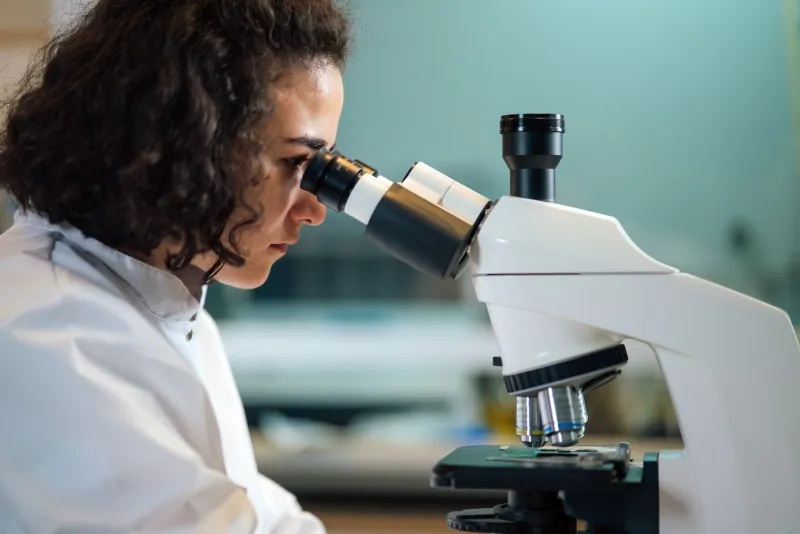
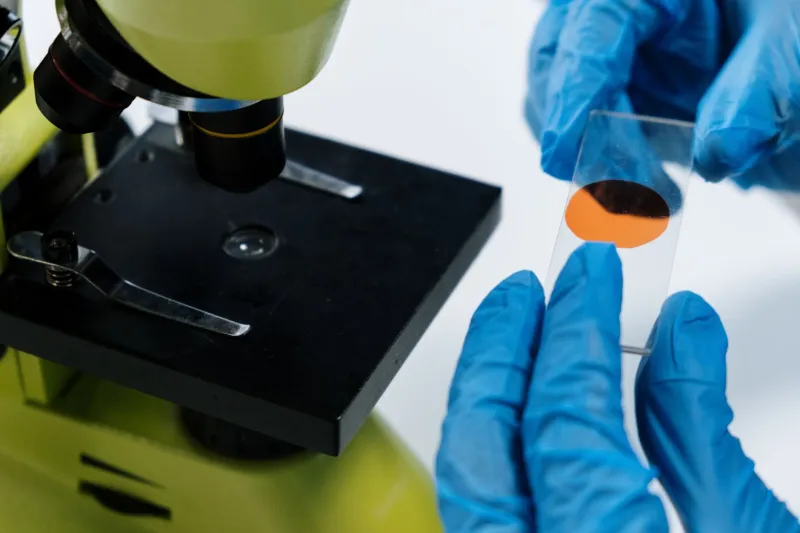
The story begins in the 1890s, when German pathologist Ferdinand Blum discovered, somewhat accidentally, that formaldehyde could fix biological tissue in a way that preserved its microscopic architecture with extraordinary precision. The mechanism involves the cross-linking of proteins — formaldehyde reacts with amino groups in cellular proteins, creating stable molecular bridges that lock the tissue's structure in place. This process halts decomposition, maintains cellular morphology, and produces specimens that can be sectioned, stained, and examined under a microscope with a level of detail that remains the benchmark for histological diagnosis.
What followed was the systematic construction of an entire diagnostic discipline around this chemistry. Staining protocols, antibody panels for immunohistochemistry, molecular assays, and the interpretive expertise of generations of pathologists — all of it was developed in the context of formalin-fixed tissue. The tissue tells a story, and pathologists have spent more than a century learning to read that story from samples preserved in formaldehyde.
The Regulatory Pressure to Find Something Better
As evidence of formaldehyde's carcinogenicity accumulated through the latter half of the twentieth century, regulatory agencies and public health bodies began pressing the medical community to reduce occupational exposure. OSHA's action level sits at 0.5 ppm, with a short-term exposure limit of 2 ppm. The National Institute for Occupational Safety and Health has recommended even stricter controls. For pathology laboratory workers — histotechnicians, pathologists' assistants, and autopsy staff — these standards translate into requirements for engineering controls, ventilation systems, personal protective equipment, and ongoing air monitoring.
This regulatory environment created an obvious incentive to find a replacement. If a preservation medium could deliver comparable diagnostic results without the carcinogenic risk, hospitals and commercial laboratories would have compelling reasons to adopt it. The search has been earnest and well-funded. It has not produced a viable substitute.
Why Alternatives Keep Falling Short
Researchers have investigated dozens of alternative fixatives over the past several decades. Glyoxal-based solutions, zinc salt formulations, ethanol-based fixatives, and proprietary commercial products have all been evaluated with the hope of displacing formalin. Each has demonstrated some utility in specific contexts. None has replicated the full performance profile of formaldehyde across the range of diagnostic applications that pathology requires.
The technical obstacles are substantial. A replacement fixative must preserve tissue morphology well enough for conventional light microscopy. It must be compatible with the immunohistochemical staining protocols used to identify cancer subtypes, infectious agents, and tissue markers that guide treatment decisions. It must support in-situ hybridization techniques used in molecular pathology. It must work reliably across a wide range of tissue types — from dense fibrous tumors to delicate neural tissue to small endoscopic biopsies. And it must do all of this consistently, across varying tissue volumes, fixation times, and processing conditions.
Formaldehyde clears every one of these bars. Proposed alternatives typically clear some of them, under some conditions, and fail others. Glyoxal, for example, has shown promise for morphological preservation but exhibits inconsistent performance in immunohistochemistry protocols that were validated on formalin-fixed tissue. Zinc-based fixatives produce good cellular detail in some tissue types but present their own handling and disposal challenges. The regulatory and validation burden of switching an entire laboratory's workflow to a new fixative is enormous — every assay, every antibody, every staining protocol would need to be revalidated, a process that costs time, money, and resources that most clinical laboratories do not have in reserve.
The Molecular Pathology Complication
The situation grew considerably more complex as molecular pathology expanded through the early twenty-first century. Genomic testing of tumor tissue — identifying mutations that predict response to targeted therapies, for instance — became a routine part of cancer care. These tests require extractable nucleic acids from archived tissue samples. Formaldehyde cross-linking degrades DNA and RNA to some extent, which complicates molecular analysis. This limitation prompted renewed interest in alternatives that might preserve nucleic acid integrity better than formalin.
The irony is that even this limitation has been partially addressed within the formalin-fixed, paraffin-embedded framework. Preanalytical protocols have been refined, extraction methods improved, and sequencing technologies adapted to work with degraded nucleic acids. The infrastructure built around formaldehyde-fixed tissue proved more adaptable than its critics anticipated, further entrenching the technology at precisely the moment when it seemed most vulnerable to displacement.
Living With the Risk — and Managing It
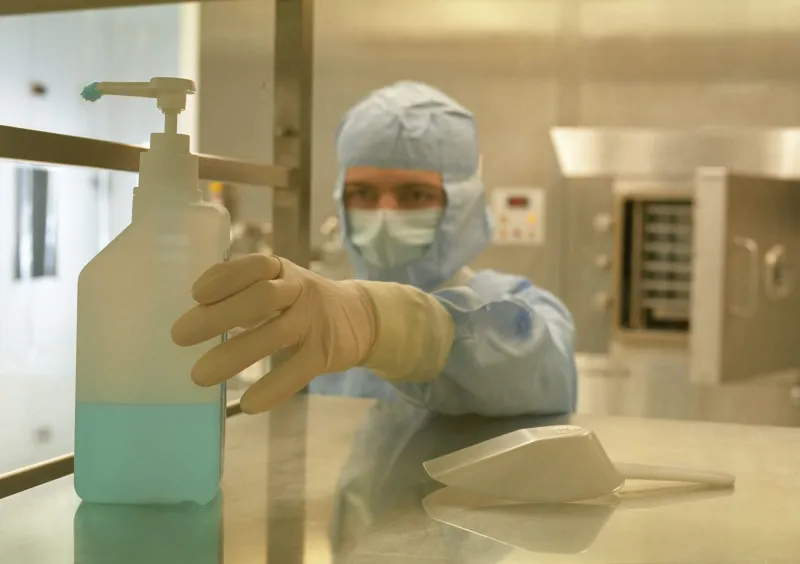
Pathology laboratories across the United States have responded to the regulatory and ethical pressure not by abandoning formaldehyde, but by engineering around its hazards. Ventilated grossing stations, closed tissue processors, automated formalin dispensing systems, and rigorous air quality monitoring have become standard features of modern pathology departments. Some institutions have adopted lower-concentration formalin solutions or reduced-exposure protocols that maintain fixation quality while decreasing the volume of formaldehyde vapor released into the work environment.
Occupational safety programs in larger academic medical centers now include regular biological monitoring of laboratory workers, tracking urinary formic acid levels or measuring formaldehyde adducts in blood proteins to assess actual internal exposure. These programs reflect a mature understanding of the risk — not a denial of it, but a systematic effort to manage it within acceptable limits while preserving the diagnostic capabilities that patient care depends on.
What the Future May Hold
Research into formaldehyde alternatives continues, driven by a combination of scientific curiosity, regulatory pressure, and genuine concern for laboratory worker health. The most promising directions involve not wholesale replacement of formaldehyde, but hybrid approaches — fixatives that combine lower concentrations of formaldehyde with other preservative agents, or novel formulations that reduce vapor pressure and therefore inhalation risk without altering tissue chemistry. Microwave-assisted fixation and ultrasound-enhanced processing represent process innovations that may allow shorter fixation times and reduced chemical volumes.
Whether any of these approaches will eventually displace formalin as the universal standard remains genuinely uncertain. What is clear is that the displacement, if it comes, will require not just a chemical that works as well as formaldehyde, but one that works well enough to justify the staggering cost of revalidating a century's worth of diagnostic methodology. That is a threshold that no candidate has yet approached. Until it is crossed, pathology will continue to depend on the same chemical that made it possible in the first place.