Preserving the Irreplaceable: How Museums Navigate Formaldehyde's Complicated Legacy
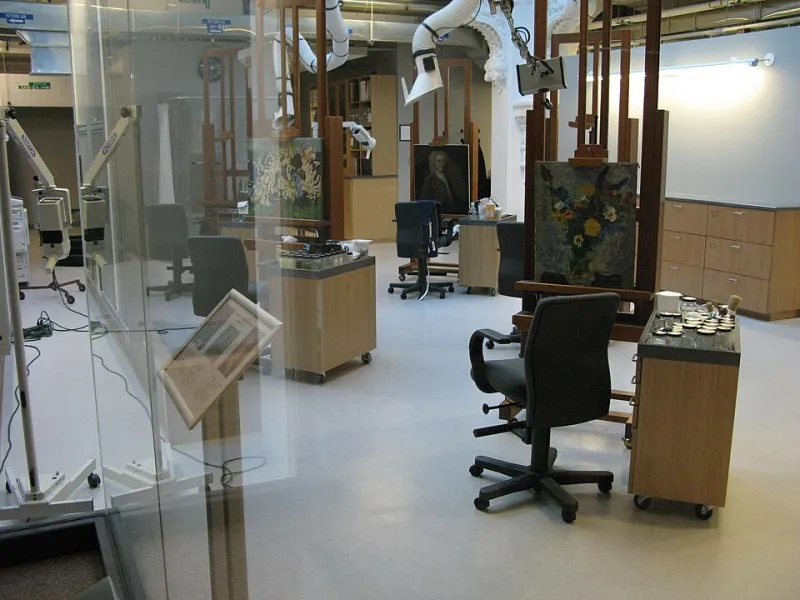
Photo: davidgalestudios Camera location38° 53′ 52.25″ N, 77° 01′ 24.56″ W View this and other nearby images on: OpenStreetMap 38.897846; -77.023488 Licensing This file is licensed under the Creative Commons Attribution-Share Alike 2.0 Generic licen
In the basement storage rooms of natural history museums across the United States, glass jars line metal shelving in rows that extend far beyond what the public ever sees. Inside those jars—sealed in fluid that carries the faint, unmistakable sharpness of aldehyde chemistry—are fish collected from rivers that no longer exist in their original form, amphibians from ecosystems now altered beyond recognition, and invertebrates gathered by naturalists whose field notes are themselves museum artifacts. These specimens are irreplaceable. And for much of the past 150 years, formaldehyde has been central to keeping them intact.
The relationship between formaldehyde and cultural preservation is older, broader, and more complicated than most visitors to a natural history exhibit would suspect. Understanding it requires looking at both the chemistry that makes the compound so effective and the human cost that its long-term use has imposed on the professionals who work with it.
The Chemistry of Preservation
Formaldehyde's preservative power derives from its reactivity with biological molecules. When tissues are immersed in a formalin solution—typically a 4 to 10 percent aqueous solution of formaldehyde—the compound rapidly cross-links proteins and nucleic acids, creating a stabilized matrix that resists microbial decomposition and enzymatic degradation. This process, known as fixation, effectively halts the biological decay that would otherwise destroy organic material within days.
For natural history collections, this chemistry is invaluable. Soft-tissue specimens that would be unpreservable by drying or freeze-drying alone can be maintained in a state close to their living morphology for decades. Taxonomists studying subtle anatomical features, geneticists extracting DNA from historical samples, and educators teaching comparative anatomy all depend on wet collections fixed with formaldehyde.
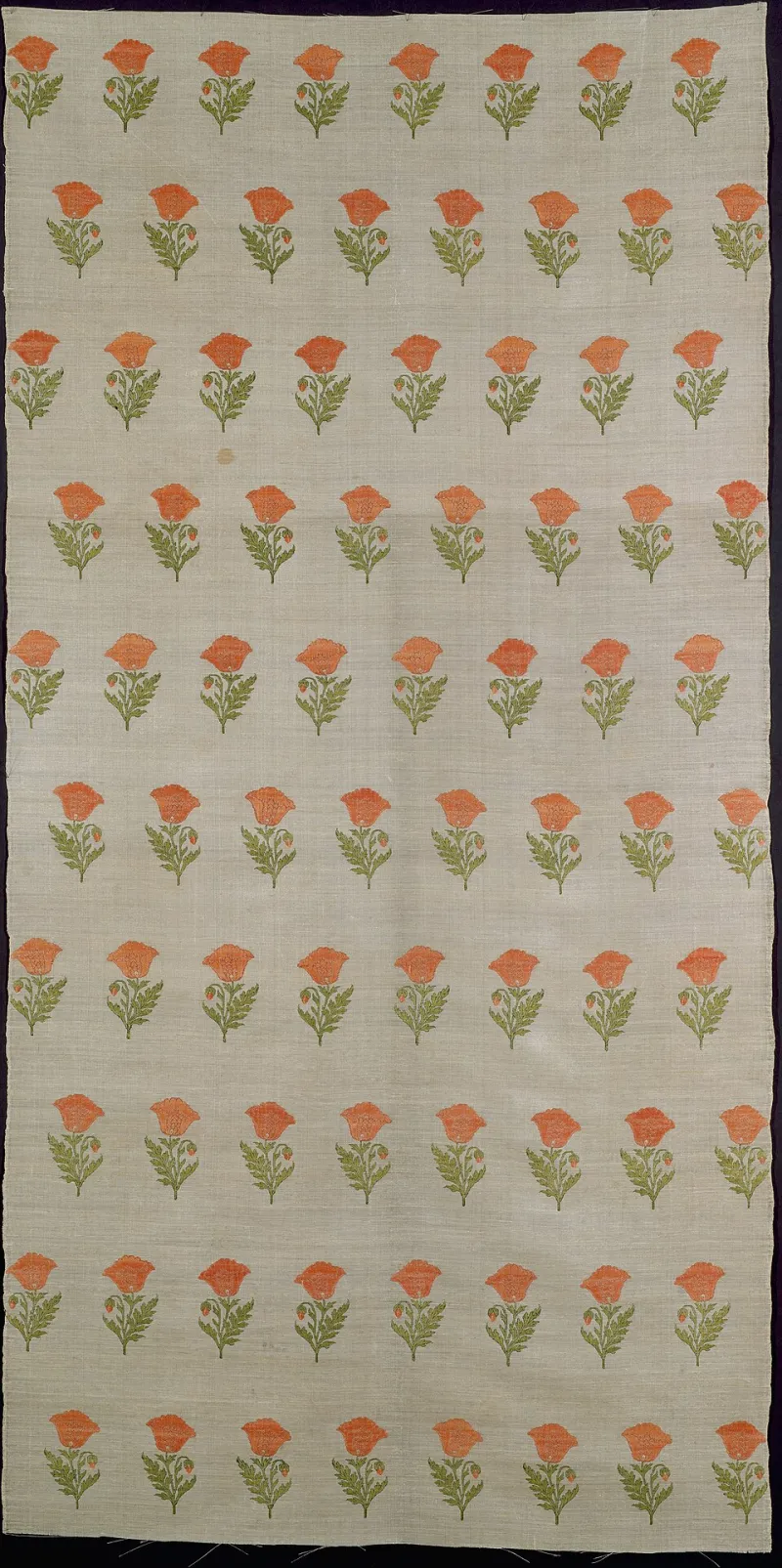
Beyond biology, formaldehyde-based compounds have found application in the treatment of historic textiles and paper. Certain conservation treatments use formaldehyde resins to consolidate fragile fibers, reduce hygroscopic instability, or protect materials against insect damage. The compound also appears in some adhesives used in archival mounting and repair work.
A Century of Practice—and Its Occupational Costs
The widespread adoption of formalin in natural history collections began in the late nineteenth century, predating modern occupational health science by decades. For much of the twentieth century, conservators and collection managers worked with formaldehyde under conditions that would be considered unacceptable by contemporary standards—inadequate ventilation, minimal personal protective equipment, and limited awareness of cumulative exposure risks.
The scientific literature on formaldehyde's health effects has grown substantially since the 1970s. The International Agency for Research on Cancer classified formaldehyde as a Group 1 human carcinogen in 2004, based on evidence linking high occupational exposures to nasopharyngeal cancer and, more recently, to certain leukemias. OSHA's permissible exposure limit for formaldehyde in US workplaces stands at 0.75 parts per million as an eight-hour time-weighted average, with an action level of 0.5 ppm.
For collection managers who spend their careers in proximity to large wet collections, these limits are not abstract numbers. Many professionals who entered the field before modern ventilation standards were implemented have described chronic respiratory irritation, eye sensitivity, and heightened concern about long-term cancer risk. Retrospective studies of museum and laboratory workers with high formaldehyde exposure have produced mixed results, but the precautionary consensus within the conservation profession has clearly shifted toward reducing exposure wherever feasible.
How Institutions Are Responding
Leading natural history institutions in the United States—including the Smithsonian, the American Museum of Natural History, and major university natural history collections—have invested in engineering controls designed to minimize airborne formaldehyde concentrations in collection storage and processing areas. Fume hoods, local exhaust ventilation systems, and negative-pressure storage rooms are now standard in newly constructed or renovated facilities.
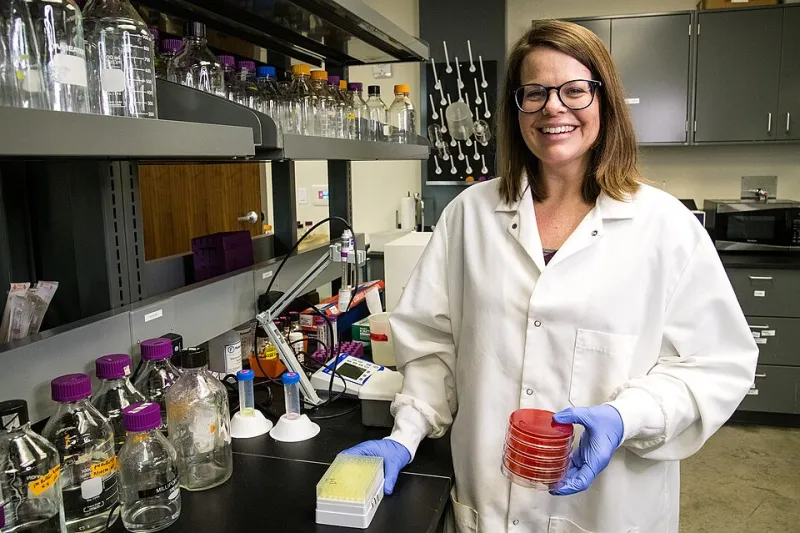
Personal protective equipment protocols have similarly been updated. Nitrile gloves, chemical splash goggles, and respiratory protection rated for aldehyde vapors are required in many collection environments. Institutions conducting active fixation work—processing newly acquired specimens—typically require powered air-purifying respirators or supplied-air systems during the initial fixation phase, when formaldehyde concentrations are highest.
Beyond engineering and personal protection, some institutions have begun the process of transferring formalin-fixed specimens into ethanol for long-term storage. Ethanol is a less effective primary fixative than formalin but serves adequately as a long-term storage medium for already-fixed specimens. This transfer reduces chronic airborne exposure for collection staff while preserving the scientific integrity of the specimens themselves.
The Search for Alternatives
The conservation science community has been actively investigating alternatives to formaldehyde fixation for several decades, with results that are promising in some contexts and limited in others.
For biological specimens, buffered solutions of glutaraldehyde—a related dialdehyde—offer comparable fixation quality for certain tissue types and are used extensively in electron microscopy preparation. However, glutaraldehyde carries its own toxicity profile and is not without occupational health concerns. It is not a straightforward substitute in large-scale collection work.
Freeze-drying (lyophilization) and plastination have expanded the range of preservation options for certain specimen types. Plastination, developed by anatomist Gunther von Hagens in the 1970s, replaces biological fluids with curable polymers, producing specimens that require no ongoing chemical maintenance and pose minimal exposure risk to handlers. The technique has been adopted by medical schools and some natural history institutions for specific applications, though the initial processing still involves solvent chemistry and is not universally applicable to soft-tissue wet collections.
For archival and textile conservation, researchers are exploring consolidants and stabilizers derived from synthetic polymers and bio-based materials that can replicate some of the structural functions of formaldehyde-based treatments without the associated exposure risks. Progress has been made, but the conservation profession is cautious about wholesale substitution—the long-term performance of newer materials over decades or centuries remains less well characterized than that of established formaldehyde-based treatments.
An Ongoing Negotiation
The museums and archives that safeguard American cultural and scientific heritage are not in a position to simply abandon formaldehyde. The compound is embedded in collections that represent centuries of irreplaceable knowledge, and the chemistry that makes it effective at preservation also makes it difficult to replace across all applications simultaneously.
What the field has achieved—and continues to refine—is a more deliberate negotiation between the compound's preservation value and its human cost. Better ventilation, rigorous protective equipment, phased transitions to safer storage media where feasible, and sustained investment in alternative chemistry research represent a pragmatic path forward.
For the conservators and collection managers who spend their careers protecting objects that no generation will ever be able to recreate, that negotiation is not an abstraction. It is the practical, daily work of preserving the past without sacrificing the health of the people doing the preserving.