Is Your Home's Air Safe? A Step-by-Step Guide to Testing for Formaldehyde Yourself
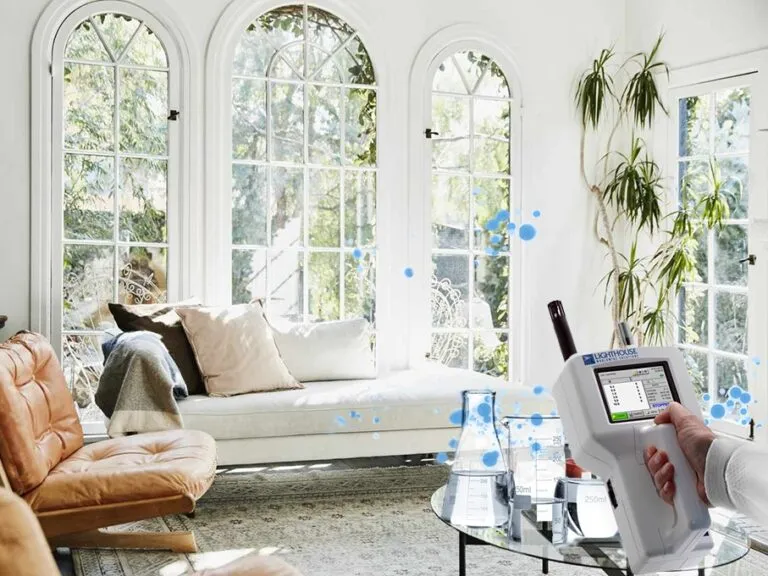
Photo: homeowner testing indoor air quality home living room, via fixomega.com
The concern is legitimate. Formaldehyde is present in a wide range of common household materials—pressed wood furniture, laminate flooring, certain paints, adhesives, and even some textiles—and it off-gasses into indoor air over time. The EPA has identified it as a probable human carcinogen at sustained elevated concentrations, and indoor air quality researchers consistently find that formaldehyde levels inside American homes can exceed outdoor ambient concentrations, sometimes significantly.
What many homeowners do not realize is that they have practical options for measuring their own exposure. Consumer-grade formaldehyde test kits are available online and in home improvement stores, and while they are not laboratory instruments, they can provide meaningful data when used correctly. The challenge lies in choosing the right tool, interpreting the results accurately, and knowing which rooms and objects to prioritize.
Understanding What You Are Measuring
Before purchasing any test kit, it helps to understand the units you will encounter. Formaldehyde concentrations in indoor air are typically reported in parts per million (ppm) or micrograms per cubic meter (µg/m³). The EPA's reference concentration for chronic inhalation exposure is 0.008 ppm. The World Health Organization recommends that indoor formaldehyde levels not exceed 0.08 ppm over a 30-minute average. OSHA's action level for occupational settings is 0.5 ppm.
For residential purposes, most experts recommend aiming for levels below 0.1 ppm. Newly constructed or recently renovated homes frequently register higher readings, particularly in the first one to two years after construction, when off-gassing from building materials is most intense.
Types of Consumer Testing Kits
Colorimetric Badge Tests are the most widely available and affordable option, typically retailing between $15 and $40. These passive samplers use a chemical reaction that produces a color change proportional to formaldehyde concentration. The badge is exposed for a set period—usually 24 to 72 hours—then compared to a reference chart or mailed to a laboratory for analysis. They provide a rough average concentration over the sampling period and are best suited for identifying whether a problem exists rather than precisely quantifying it.
Active Air Sampling Kits use a small pump to draw a measured volume of air through a sorbent tube over a defined time window. These kits generally require laboratory analysis and cost between $50 and $150 including the lab fee. Because they collect a defined air volume, they yield more precise measurements and are better suited for documenting compliance with recommended guidelines.
Electrochemical Sensor Monitors are reusable electronic devices that provide real-time or near-real-time formaldehyde readings. Consumer-grade models range from approximately $80 to several hundred dollars. Quality varies considerably. Entry-level devices may not reliably distinguish formaldehyde from other volatile organic compounds, potentially inflating readings. Research-grade portable monitors exist but are priced beyond typical consumer budgets.
Professional Laboratory Analysis remains the most accurate option. An industrial hygienist or certified indoor air quality professional will collect air samples using validated methods and submit them to an accredited laboratory. Results are defensible, precise, and accompanied by professional interpretation. Costs typically range from $200 to $500 or more depending on scope, but this route is strongly recommended if you are dealing with a health concern, a real estate transaction, or a post-renovation assessment.
Where to Test First: Identifying Hotspots
Not all areas of a home off-gas equally. Prioritize the following locations:
- Newly installed pressed wood products: Particleboard, medium-density fiberboard (MDF), and oriented strand board are primary formaldehyde sources. Kitchen cabinets, bathroom vanities, and flat-pack furniture assembled in the past one to three years deserve particular attention.
- Laminate and engineered wood flooring: Especially products manufactured before stricter CARB Phase 2 and TSCA Title VI standards took effect. If your flooring was installed before 2019 and sourced from discount retailers, it warrants testing.
- Bedrooms: People spend more time in bedrooms than any other room, so exposure there matters disproportionately. Mattresses, carpet padding, and closet interiors built with composite wood all contribute.
- Attached garages: Vehicles, stored paints, and adhesives can elevate formaldehyde levels that migrate into living spaces through shared walls.
- Newly painted rooms: Some latex paints contain formaldehyde-based preservatives that off-gas during and after application.
How to Conduct a DIY Test Properly
For results to be meaningful, testing conditions must be controlled. Follow these steps:
- Close the home for 12 hours before testing. This means windows, exterior doors, and HVAC systems drawing outside air should be shut. This simulates the closed-building scenario that reflects realistic daily exposure.
- Maintain normal indoor temperature. Formaldehyde off-gassing increases with heat. Testing during a cold snap with the heat off will understate typical exposure.
- Place the sampler at breathing height, approximately three to five feet off the floor, away from direct sunlight and HVAC vents.
- Test multiple rooms separately rather than placing a single sampler in a central hallway. A kitchen cabinet may read significantly higher than a bedroom with older furniture.
- Follow the manufacturer's timing instructions precisely. Overexposure of a colorimetric badge will saturate the reagent and produce inaccurate readings.
Interpreting Your Results
A reading below 0.05 ppm in a well-ventilated home is generally considered acceptable by most indoor air quality standards. Readings between 0.05 and 0.1 ppm warrant attention, particularly for households with young children, pregnant individuals, or people with respiratory conditions. Readings above 0.1 ppm indicate a meaningful source that should be identified and addressed.
If consumer test results are elevated, professional confirmation is advisable before undertaking significant remediation expenditures.
Remediation Strategies That Actually Work
Opening windows helps—but only temporarily and only when outdoor air quality is adequate. Meaningful, sustained reduction requires addressing sources directly.
- Seal composite wood surfaces with low-VOC polyurethane or encapsulating paint. Cabinets, shelving, and furniture edges are the primary emission points.
- Increase ventilation strategically. Running bathroom and kitchen exhaust fans daily, even for short periods, substantially reduces indoor formaldehyde accumulation.
- Control temperature and humidity. Keeping indoor temperatures below 77°F and relative humidity below 50 percent measurably reduces off-gassing rates.
- Replace high-emitting materials selectively. If budget permits, replacing older MDF-heavy cabinetry with solid wood or formaldehyde-free alternatives produces lasting improvement.
- Use air purifiers with activated carbon filtration. HEPA filters alone do not capture formaldehyde. Activated carbon or potassium permanganate media are required. Look for units specifically rated for VOC removal.
- Allow new furniture and flooring to off-gas outdoors before bringing them inside. Leaving flat-pack furniture assembled in a garage for several days before moving it indoors can reduce initial off-gassing significantly.
When to Call a Professional
DIY testing is a useful starting point, but it has real limitations. If a household member has developed unexplained respiratory symptoms, chronic headaches, or eye irritation, professional assessment is warranted. Similarly, if you are purchasing a home with significant composite wood construction or recent renovation work, commissioning a professional air quality assessment before closing provides documented baseline data that a colorimetric badge cannot.
Formaldehyde is a manageable indoor air quality concern—not an inevitable one. With the right tools, a methodical approach, and targeted remediation, most American homeowners can meaningfully reduce their exposure and interpret their indoor environment with greater confidence.